Subgrade Work That Keeps Concrete From Failing
Site Preparation for Concrete / Flatwork in Boise for preventing slab cracks, settling driveways, and drainage problems before the pour
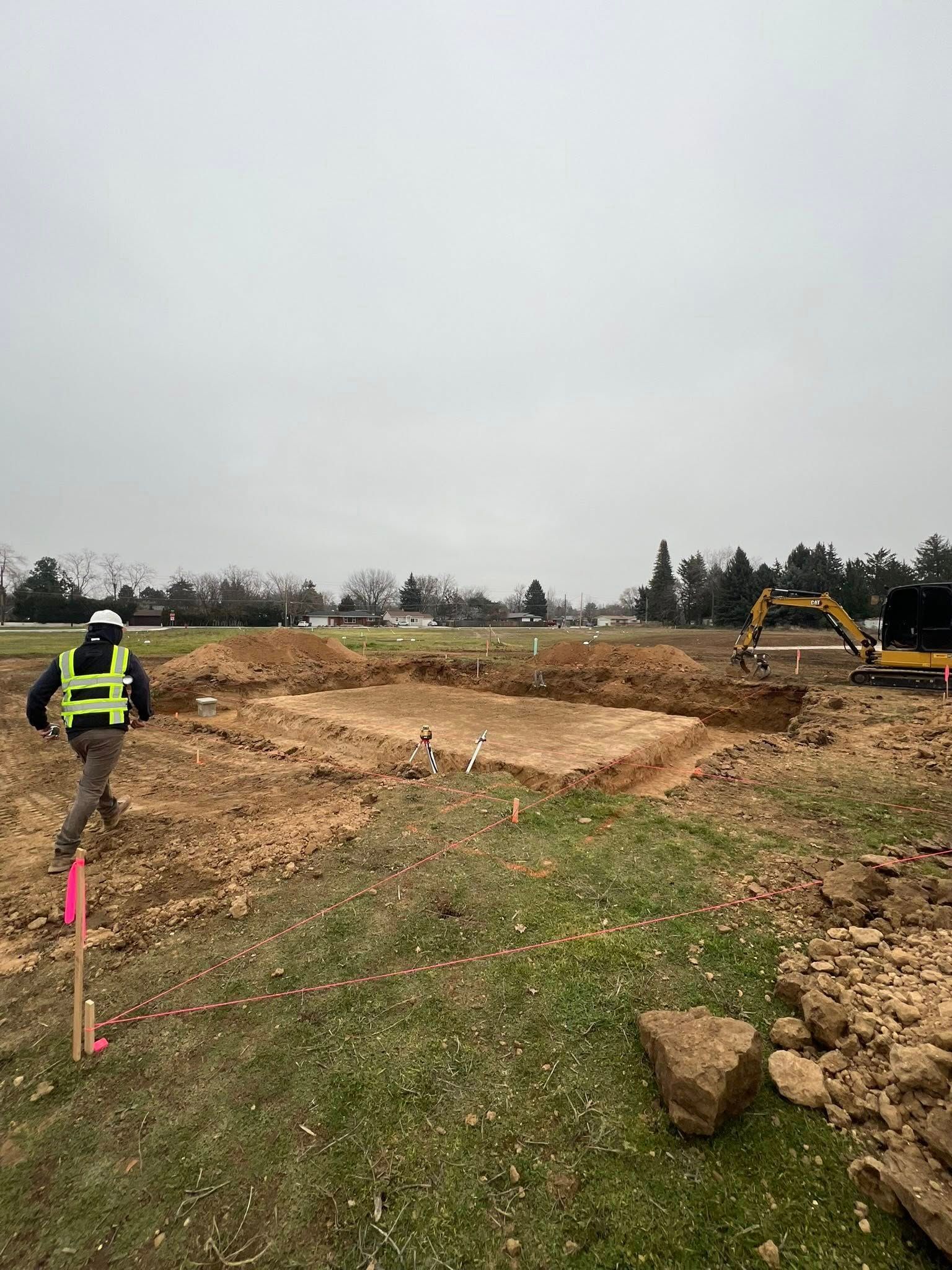
All Set Construction prepares subgrade surfaces in Boise for concrete driveways, slabs, sidewalks, and other flatwork where the ground underneath determines whether the finished surface lasts or fails. You're getting compacted base material, proper slope for drainage, and a stable surface that won't shift after the concrete cures. The preparation starts with removing unsuitable soil, adding and compacting base rock, and confirming grade with laser levels so the concrete contractor pours to the correct thickness and elevation without guesswork.
Preparing ground for flatwork involves more than spreading gravel. It requires understanding how soil type, moisture content, and compaction density affect long-term stability. Loose or organic soil gets removed and replaced with aggregate that compacts uniformly. The base is built in lifts, with each layer compacted before the next is added, ensuring the entire subgrade supports the load without voids or soft spots. Proper slope is built into the base so water sheds off the finished concrete instead of pooling or flowing toward structures.
Contact All Set Construction to coordinate subgrade prep with your concrete schedule and ensure the surface is ready when the pour crew arrives.
Base Material and Compaction Standards
You'll see unsuitable topsoil excavated and replaced with crushed aggregate, typically three-quarter-inch minus rock that locks together under compaction. All Set Construction spreads the material in controlled lifts and runs a vibratory roller over each layer, checking density with visual inspection and sometimes proofing to ensure the base won't settle. The compacted surface is graded to match finish elevations provided by your concrete contractor, with slope confirmed so drainage moves predictably away from the slab.
After preparation is complete, you'll notice a firm, level base that doesn't give underfoot, with edges clearly defined and ready for formwork. Water that hits the surface during prep runs off instead of pooling, which signals that drainage will function correctly once concrete is in place. The subgrade is stable enough for concrete trucks and finishing equipment to work without rutting or disturbing the base, which prevents uneven thickness and future cracking.
The work includes excavation, base rock placement, and compaction to grade, but does not include formwork, rebar placement, or the concrete pour itself. Final subgrade elevations are verified before forms go in, and any adjustments are made at that stage.
What to Clarify Before Concrete Prep Begins
These questions help coordinate timing and ensure the subgrade meets the specifications your concrete contractor needs.
- What type of base material works best under concrete flatwork? Crushed aggregate with fines, often called three-quarter-inch minus, compacts tightly and provides a stable, uniform surface that resists settling and shifting under load.
- How deep does the base need to be for a residential driveway? Most driveways require four to six inches of compacted aggregate depending on soil conditions and expected vehicle loads, with deeper bases used where soil is soft or poorly draining.
- When should subgrade work happen relative to the concrete pour? Prep should be completed and inspected at least a day before the pour to allow time for any corrections and to ensure the base stays dry and undisturbed.
- Why does compaction prevent cracking in finished concrete? A densely compacted base eliminates voids and prevents settling, so the slab remains uniformly supported and doesn't develop stress cracks from uneven ground movement.
- What site conditions in Boise affect flatwork prep? Clay-heavy soils may need additional base depth to prevent moisture-related movement, while sites with poor natural drainage require careful slope design to keep water away from the slab edges.
All Set Construction works directly with concrete contractors to deliver subgrade conditions that meet project specs and keep pour schedules on track. Reach out to confirm your flatwork prep requirements and timing.